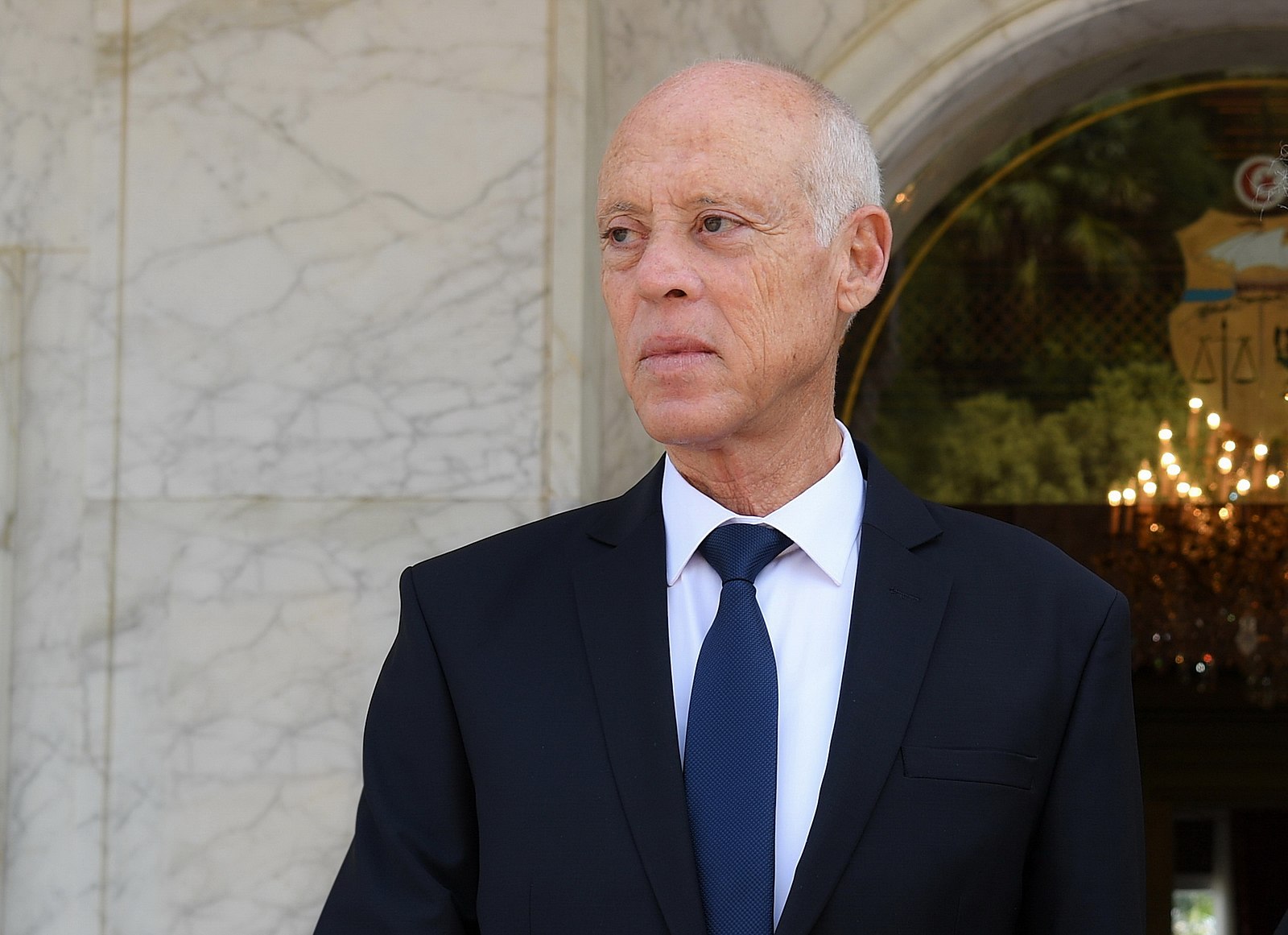
Tunisia has held its third presidential election since the 2010 Arab Spring and the overthrow of President Zine El Abidine Ben Ali. Despite hopes for a democratic flourishing in what was the origin of the Arab Spring, after eight years of slow reform, economic crises, and persistent corruption, Tunisia turned to law professor Kais Saied, who ran as an independent anti-establishment candidate, to win the 2019 presidential election.
Despite campaigning as a moderate technocrat who would purge Tunisian institutions of corruption, his reign quickly turned authoritarian, emulating many of the anti-democratic and human rights abuses of the Ben Ali government. The 2024 presidential election has seen Saied declared victor and successfully consolidated power in an election far from free and fair.
The Tunisian Independent High Authority for Elections (ISIE) has announced Saied received 90.7% of the vote in a race where most opposition candidates were barred from standing.
In the run-up to the election, the ISIE declared 14 of the 17 candidates who applied to participate in the election “ineligible.” Only two candidates were approved to run against the incumbent: left-wing nationalist Zouhair Magzhaoui, who is widely considered to be a paper candidate supportive of Saied, and the leader of the liberal Azimoun party, Ayachi Zammel, who spent much of the election campaign, including the election day, in prison.
Weeks before the election, Zammel received two prison sentences that combined sentenced him to over two years behind bars for falsifying paperwork relating to his candidacy. On October 1, less than a week before the election, he was sentenced to a further 12 years in prison related to “voter endorsements.” Zammel and human rights groups in Tunisia state the charges against him are false and politically motivated.
Despite Saied claiming victory, the election has been overshadowed by the growing protests against the government, which the people accuse of hijacking their democracy. Due to the abuses, violations, and infringements by the Saied government, many called for a boycott of the elections.
Just days before the October 6 election, five left-wing parties, including the Workers’ Party, the Socialist Party, Democratic Forum for Labour and Liberties, Social Democratic Path, and the Democratic Modernist Pole, instructed their supporters to boycott the proceedings.
The moderate Islamist party that won majority support in Tunisia after the Arab Spring, Ennahda, criticized the electoral process and its legitimacy but held back from instructing how people should act. The co-founder and leader of Ennahda, Rached Ghannouchi, who was Speaker of the Tunisian parliament before it was dissolved by Saied in 2022, remains in prison. Former President Moncef Marzouki, the first Tunisian president to win a free and fair election in 2014, also called for a boycott.
The effect of such disillusionment with the political process in Tunisia ahead of the election led to a record low turnout of only 29%, representing less than three million of the over nine million eligible voters.
While Saied’s election victory clearly lacks any legitimacy, a second term is expected to build on his first, which saw backsliding across all of Tunisia’s institutions. The 66-year-old president, often referred to as “Robo-cop,” has doubled down on his promise to eradicate corruption in the country, which many predict will further erode human rights and civil liberties in Tunisia, taking the country back to a similar state as under the 25-year rule of Ben Ali.
Since being elected in 2019, Saied has been accused of waging “lawfare” against his opponents, arresting leaders and key members of opposition parties such as Ennahda, and using the judiciary to target opponents with trumped-up charges aimed at intimidating and harassing them. As of September 2024, almost 100 members of Ennahda had been arrested by Saied’s government, many under spurious allegations such as terrorism and treason.
Despite the obvious pivot toward authoritarianism in Tunisia, Saied maintains support from the broad coalition he managed to assemble in 2019, which included many young people and those discontent with the entire system in Tunisia. To his supporters, Saied continues to be viewed as the antidote to what they see as the source of the country’s problems: self-interested and publicity-hungry politicians who put their interests ahead of the needs of the people.
Such cult-like belief in Saied has been made possible for two reasons. Firstly, as a professor with no political track record before 2019, he has had no record to defend and has been able to position himself as the anti-establishment candidate capable of “draining the swamp.”
Secondly, after seizing power, he has effectively used the levers of state to control Tunisian society in a far more effective manner than the likes of Ben Ali. The introduction and regular enforcement of Decree 54, which criminalizes any online speech deemed false, has resulted in the imprisonment of numerous journalists and online critics, created an environment in which dissent against the president is limited, and created a media environment that is by and large supportive of the president.
With control of the media and information landscape, electoral institutions, and the judiciary and police, Saied has set himself up to succeed Ben Ali as Tunisia’s new dictator.
Sghayer Zakraoui, a law professor at the University of Tunis, was quoted as saying that Tunisian politics had once again returned to “the absolute power of a single man who places himself above everyone else and believes himself to be invested with a messianic message.”
However, it remains to be seen whether Saied can address the flatlining Tunisian economy, the issue voters care most about. Since being elected in 2019, the COVID-19 pandemic has covered up the Saied government’s inability to address the economic challenges facing Tunisia and given Saied a convenient and plausible excuse. As the impact of the pandemic fades, the weak economic growth, which is even lower than in the immediate years following the overthrow of Ben Ali, may come to haunt Saied.
After a short-lived boom in 2021, post-pandemic growth in Tunisia has settled around 1%, lower than Algeria and Morocco to the west, and even lower than Libya. In recent years, Tunisia’s credit rating has been downgraded by international rating agencies so regularly that it has been described as a recurring feature of the country’s political calendar.
With foreign debt in excess of 100% of GDP, inflation in double digits, and recurring shortages of staple foods that have been exacerbated by the war in Ukraine, Tunisia once again appears to have all the variables necessary for political instability.
Under Saied, just as under Ben Ali, the poor continue to get poorer, regional disparities have widened, and the ability of the government to adequately tax, reform, or take any kind of action to address Tunisia’s slow descent into becoming a failed state is absent.
Image attribution – Houcemmzoughi
Leave a Reply