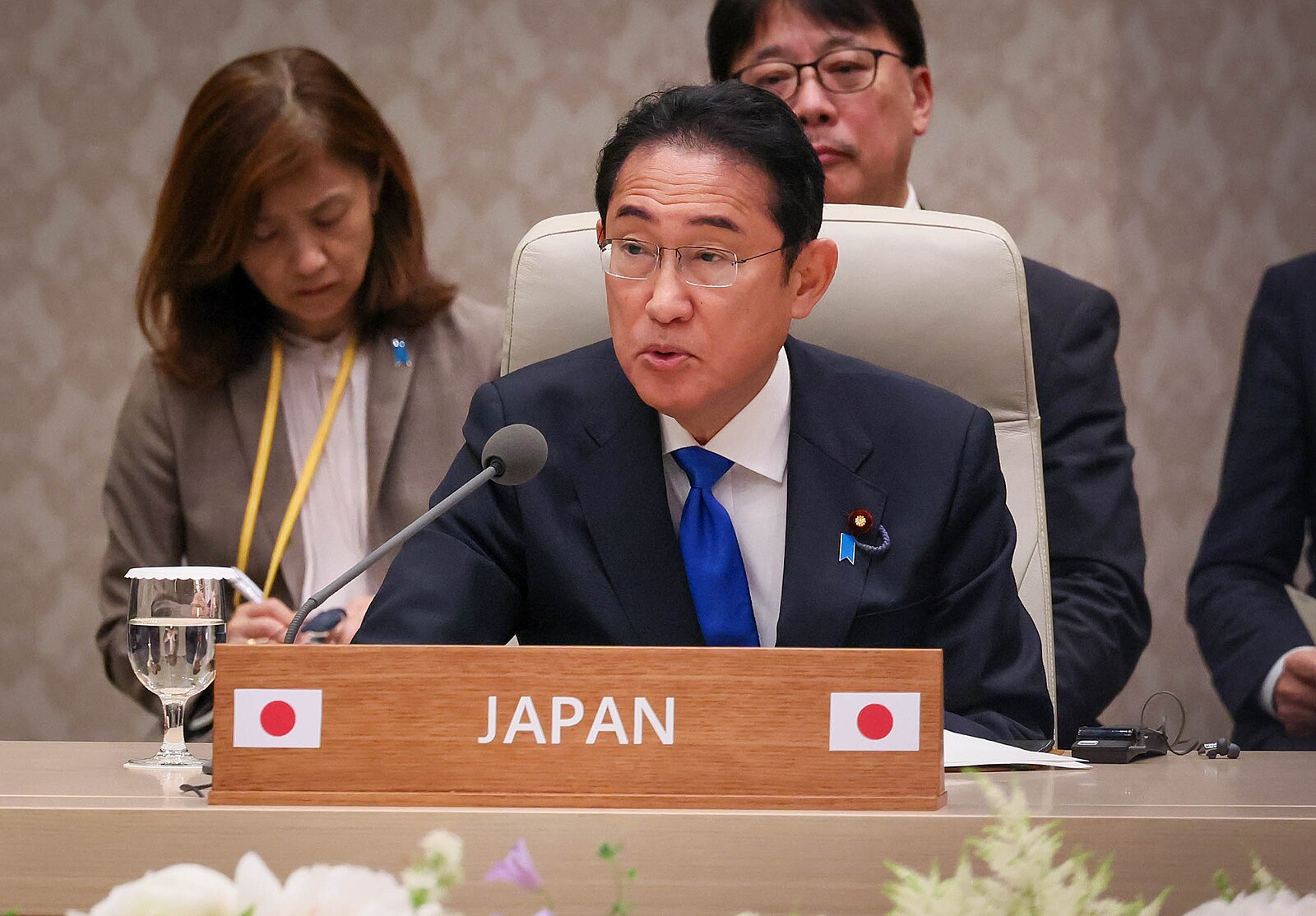
The Japanese Prime Minister, Fumio Kishida, has announced his decision to stand down following consecutive crises that have seen his favorability with the public reach record lows.
The Liberal Democratic Party (LDP) is set to have a leadership contest in September 2024 that will select the new leader of their party and who will become Prime Minister until the next election, currently scheduled for October 2025.
After being elected leader of the LDP and subsequently confirmed as Prime Minister by the National Diet in 2021, Kishida struggled to make the type of domestic impact many had hoped for.
For decades, the Japanese economy has been characterized by low growth and deflation, and while signs emerged that the economy was turning a corner, Kishida’s “New Capitalism” failed to take off in time as static wages and a cost of living crisis went largely unaddressed, and his inability to fully explain his wealth redistribution plans spooked the Tokyo markets in what became known as the “Kishida Shock.”
For many, the writing has been on the wall for Kishida, who surpassed the average tenure—two and a half years—of LDP prime ministers earlier this year.
Due to the scale of the cost of living crisis, as well as revelations of the LDP funding scandal in December 2023 that implicated many senior party officials, including those associated with the late Shinzo Abe, of embezzling as much as $4 million, it simply became a matter of timing before Kishida would have to go as public trust in the LDP plummeted.
In February 2024, the Mainichi newspaper ran a poll that found only 14% of voters approved of Kishida’s government’s record, a favorability rating far below the 30% that has typically led to Prime Ministers having to resign.
Despite Kishida’s best efforts to regain the public’s trust, which included attempts to break up the multiple factions within the party, including his own, as well as sacking four of the ministers implicated in the scandal, in April 2024, three by-elections for the House of Representatives saw LDP candidates lose in what were typically considered LDP stronghold seats.
Before becoming Prime Minister in October 2021, Kishida became known as the longest-serving Foreign Minister in postwar Japanese history when he served in the role for five years under Shinzo Abe.
Despite the challenges he faced domestically and with regard to the economy, after becoming Prime Minister, Kishida led a resurgence in relations with neighboring countries and allies, most notably the United States, which has been courting allies in the Indo-Pacific as a bulwark against an increasingly assertive China.
Kishida increased Japanese defense spending to 2% of GDP, a sign that long-term, the region’s second-largest economy will be placing greater importance on national security and ensuring the Indo-Pacific remains “free and open.”
Besides working well with the United States and the Biden Administration, Kishida also oversaw a rapprochement with South Korea, settling historic grievances stemming from the Japanese occupation of Korea that led President Yoon to describe Japan as having gone from “aggressor to partner.”
Under Kishida, relations with Australia and India have improved as part of the Quadrilateral Security Dialogue they form with the United States. Japan also entered the American-Japanese-Korean trilateral pact in 2023 and signed security pacts with the United Kingdom and the Philippines.
With Kishida planning to step down in September, the race to succeed him has started, with focus on the economy and domestic policy taking center stage. Many have speculated that the former economic security minister, Takayuki Kobayashi, could be a contender for the top job. But in the conservative party of an aging society, it is unlikely someone as young as Kobayashi, who is 49 years old, will attract support from an older voter base.
Kishida’s most likely successor is widely expected to be either the former trade minister, Toshimitsu Motegi, or the former defense minister, Shigeru Ishiba—both of whom have experience correlated with the pressing challenges Japan is facing: a slowing economy and an increasingly assertive neighbor.
However, due to the scale of the crisis the LDP is facing as it relates to confidence in their party, it may be the case that an outsider is able to mount a compelling leadership bid due to the fallout of the past few years that implicates many of those running.
Many have argued that Kishida’s ability to survive in office so long despite the crises on his watch was due to the lack of credible challengers within the party who are not also implicated in the scandals he is being held accountable for.
Whoever the next leader of the LDP is, it is likely a snap election before October 2025 will occur due to the disarray the main opposition party—the Constitutional Democratic Party—finds itself in. A honeymoon period for a new leader, a bump in the polls, and a divided opposition may be the best scenario the LDP can hope for, one that is more certain than the economic and political climate in 2025.
Despite having dominated Japanese politics since the end of the Second World War and being in power for 64 of the 69 years since their formation as a party, the LDP could find themselves facing similar challenges to other incumbents around the world, as the public decides they have simply had too much of them.
If in 2025 the LDP is unable to regain the public’s trust, address the demographic time bomb the country is facing, and grow the economy, it is likely an organized opposition party or coalition could make serious gains and remove the LDP from power. Between 2017 and 2021, the LDP lost 25 seats in the House of Representatives, and given their record since 2021, more losses are forecast unless a new leader can reverse their fortunes.
Image Attribution – Author 内閣官房内閣広報室. Link.
Leave a Reply