In June, the Bangladeshi government reversed a 2018 decision that had halted the country’s controversial quota system, a system that reserved 30% of highly sought-after civil service and public sector jobs for the descendants and relatives of those who fought in the 1971 war of independence against Pakistan.
Since the reintroduction of the system, students across Bangladesh have been protesting the government’s decision and have been met with a fierce government response that has led to the deaths of at least 150 protesters, the injury of many thousands, and the arrest of many hundreds.
With rising youth and graduate unemployment, the quota system has come under scrutiny due to the privilege it entrenches for the ruling establishment, which limits opportunities for millions of less privileged students who miss out on access to roles with high job security and pay.
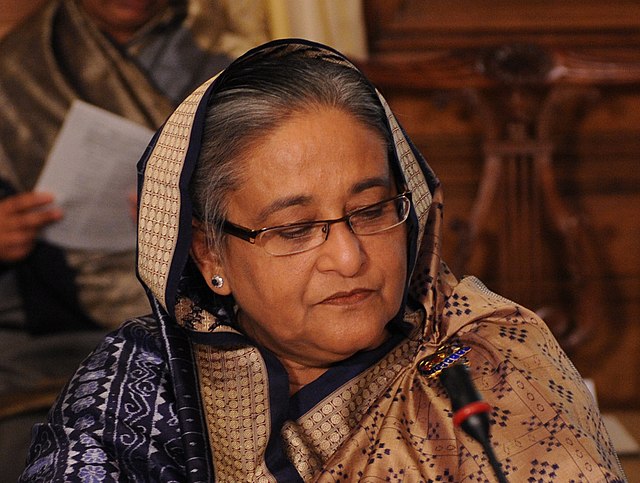
The Prime Minister of Bangladesh, Sheikh Hasina, the daughter of the nation’s founder Sheikh Mujibur Rahman, has spent 20 years leading the country since first coming to power in 1996. In January this year, Hasina won a record 5th term in office in a controversial election that was described by the US State Department and the UK Foreign Office as ‘not free and fair’. The victory marked Bangladesh’s slide away from democracy and the growing authoritarianism that Hasina has become associated with. The Economist described Bangladesh as a ‘one-party state’ after the Awami League won 224 seats, giving them a sizable majority in parliament where the ‘opposition’ has been accused of being ‘dummy’ candidates beholden to the governing party.
Despite being the world’s longest-serving female leader and having won more elections than Margaret Thatcher or Indira Gandhi, Hasina’s rule has become increasingly authoritarian, most notably when her government passed the controversial Cybersecurity Act in September 2023 that, like the previous iteration of the law, the Digital Security Act (DSA), has been used to silence thousands of journalists and critics, restrict freedom of speech, and the right to privacy.
In the face of growing protests, the Hasina government has unleashed the country’s military and security forces against the people, issued a nationwide digital blackout, and effectively introduced martial law.
On Sunday, protesters won a victory in the Supreme Court as the nation’s highest court ruled in favor of reducing the quota system to only 5% and stated that 93% of public sector jobs should be allocated on merit, with 2% set aside for ethnic minorities and the disabled.
As the ruling came in, the streets of Dhaka emptied, but paramilitary troops continued to patrol the city. Following the brutal use of force against protesters and the arrests of many hundreds, some students have issued a list of eight demands hoping to seek justice for those killed in the violence.
Others have said they will continue protesting until a government bill supporting the Supreme Court’s ruling is formally passed. In response, the government-imposed curfew has remained in place, the internet has been turned off, and the end of the saga appears uncertain.
As the uncertainty in Bangladesh intensifies, the country’s business leaders have urged the government to de-escalate, end the curfew, and restore internet service.
Whilst the initial student protests have subsided, the risk of further civil unrest in response to the government’s heavy-handed approach is the new concern many fear as the country questions the record of Hasina and the dynastic-style politics Bangladesh appears to be following.
Specifically, the business leaders have pleaded with the government to keep the Dhaka-Chattogram highway open and secure as fears grow of vandalism and disruption that will inhibit vital trade and exports.
Whilst Bangladesh has typically been viewed as one of the great economic success stories over the past 50 years, in recent years, the durability of its success has been questioned after growth forecasts have been consistently downgraded by international financial institutions from highs of 9% in 2022 to below 6% in 2024, which is expected to continue into next year.
Since 2022, Bangladesh’s economic crisis has become increasingly pronounced as external debt surpassed $100 billion for the first time, and higher interest rates led to growing difficulty in servicing the debt. Government figures have suggested inflation has fallen to below 10%, but many remain skeptical of how accurate this is given daily necessities such as food and energy remain unaffordable.
Whilst global commodity prices have declined from the heights reached in previous years, such changes have not been felt in Bangladesh as the government has raised taxes to address its increasingly unstable fiscal position. Over 37 million people have been designated as at risk of food insecurity, and a quarter of the country’s 170 million people are relying on short-term credit to meet their basic needs.
Against this backdrop, Hasina and her party, the Awami League, may find their position untenable given the controversy that surrounded their election victory earlier this year. The main opposition party, the Bangladeshi Nationalist Party, boycotted the elections as they did in 2014 as Hasina continued to use the levers of state to crack down on the opposition, silence critics, and effectively rig the election in her favor.
Image Attribution – Foreign and Commonwealth Office

Leave a Reply